Last week I had a cardiac ablation. Wires were taken through my groin up into my veins and then to my heart to burn out unnecessary tissue that had been causing me to frequently have an irregular heart rhythm. In the days leading up to the procedure, it took everything in me not to hit up google and seek out the risks associated with it. Because with every medical decision made to hopefully improve the quality of your life, there comes a list of risks and almost every one of those lists ends with 'stroke or death.'
But isn't that the way it should be? I mean as far as the human existence goes, we
should be compelled to have a better 'quality of life' about us, should we not? Just living it and managing a physical heart rhythm isn't enough. There needs to be more than just breath.
Still the only true and real thing that boosts the quality of our lives is LOVE. Love is our reason for existing. It's the precise reason for our being alive. Our goal is to
love the Lord God,
love others,
love ourselves. If we don't have love,
we are nothing. Remember that?
Be that as it may...love hurts.
Although it’s true that a higher quality of life is embodied in love, it can feel risky. Because of the incredible depth of it, there is always that chance that on the other side of love... is pain. And the fear of pain...or ample experience with it...can hold us back from having a genuinely rewarding existence from here on out.
The many facets and types of love can leave us feeling jaded or even battered depending on our exact situation. Parents may have mistreated us. Friends may have back stabbed us. Relatives may have abused us. Our child may have fallen ill. A spouse may have cheated on us. A boyfriend/girlfriend may have left us. A church friend may have talked about us. A leader may have failed us. A loved one may have passed away too soon. A trusted person may have abandoned or betrayed us.
Any of these situations and the plethora of others you may have experienced can leave you feeling afraid to really love again.
Why take the risk? It hurts too bad. We don't like to be hurt. We don't like how people make us feel. We don't like when people leave us too soon. We don't like to feel disappointed...
or worse
, completely broken.. So why lay everything on the line to love people if it's only going to leave you wounded? Intentionally or unintentionally.
These past few years have been hard for me. People I loved died. People I loved got sick. People I loved talked. People I loved walked away. Everything in me wanted to shut down. It felt like too much. I didn't want to love anymore. It felt too unreliable. The moment I felt some certainty was the moment I'd feel myself sink and my heart ache all over again.
I didn't want to allow love while the pain that resulted from it threatened to wear me down. Over and over, I'd say no more. No more to letting my guard down. My heart had become too fragile.
But that would mean I'm just existing. Breathe in. Breathe out. Day after day. Year after year.
I would barely survive. I would become numb to the beauty around me.
There would be no real quality to my life and the quantity of my days would feel like an eternity.
I would never grow or learn anything. I would never laugh with someone, or cry for that matter...
I would never feel amazing. I would never feel much at all.
Or at least I would tell myself that.
That is not the life we are built for. This time here on this earth is not for us to hold back and guard ourselves. But rather to continue to stretch and to pour into others, even if there are risks involved. True there may be no certainty in love as far as who, what, when and how much of a 'return' you'll receive on your investment into another human being,
if anything.
But that doesn't mean we just stop.
Understand this... we are here for a purpose.
Utilizing the LOVE that is instilled in all of us makes all the difference in the overall quality of our lives. We are not here to be alone and die never giving our best to someone else. We need to do more than just breathe. We are here for that child. that friend, that parent, that sibling, that significant other. We're even capable of loving strangers. People do it all the time.
Despite our misgivings, bad experiences and our fears. We are capable of choosing love over it all.
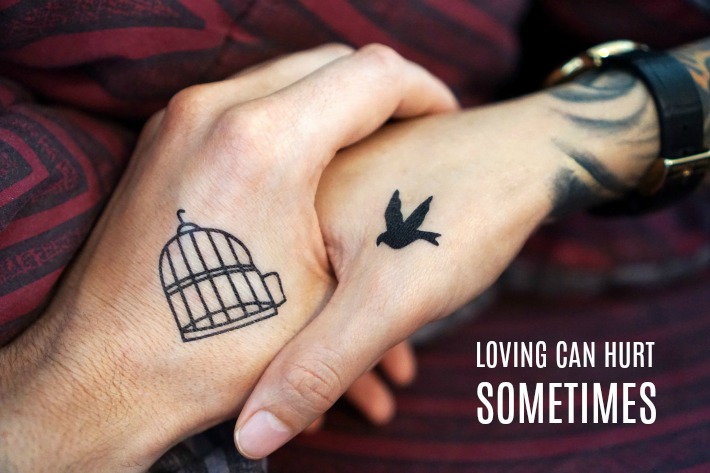
Loving can hurt. Loving can hurt sometimes.
But it's the only thing that I know
When it gets hard, you know it can get hard sometimes
It is the only thing that makes us feel alive
Loving can heal, loving can mend your soul
And it's the only thing that I know,
I swear it will get easier
Remember that with every piece of you
and it's the only thing we take with us when we die
Ed Sheeran- Lyrics to Photograph